Head to Head (2 player)
Choose an odd number of matches to play and the winner is the player with the most wins.
Round robin (3-4 players)
Play each other player once or twice (home and away), award 3pts for a win and 1pt for a draw. Winner is the player with the most points.
Knockout Tournament (4 players)
Randomly draw all players into a knockout bracket, with match winners progressing until there is a single winner.
NOTE: If you own multiple copies of Totally Football (or expansion packs), your tournament can have more than 4 players.
Setup >
Your starter squad
Start by dealing all players a hand of 6 squad players, 1 goalkeeper and 4 chaos cards

Draft your stars
Place the correct number (based on the below table) of star players onto the game board, face-up.
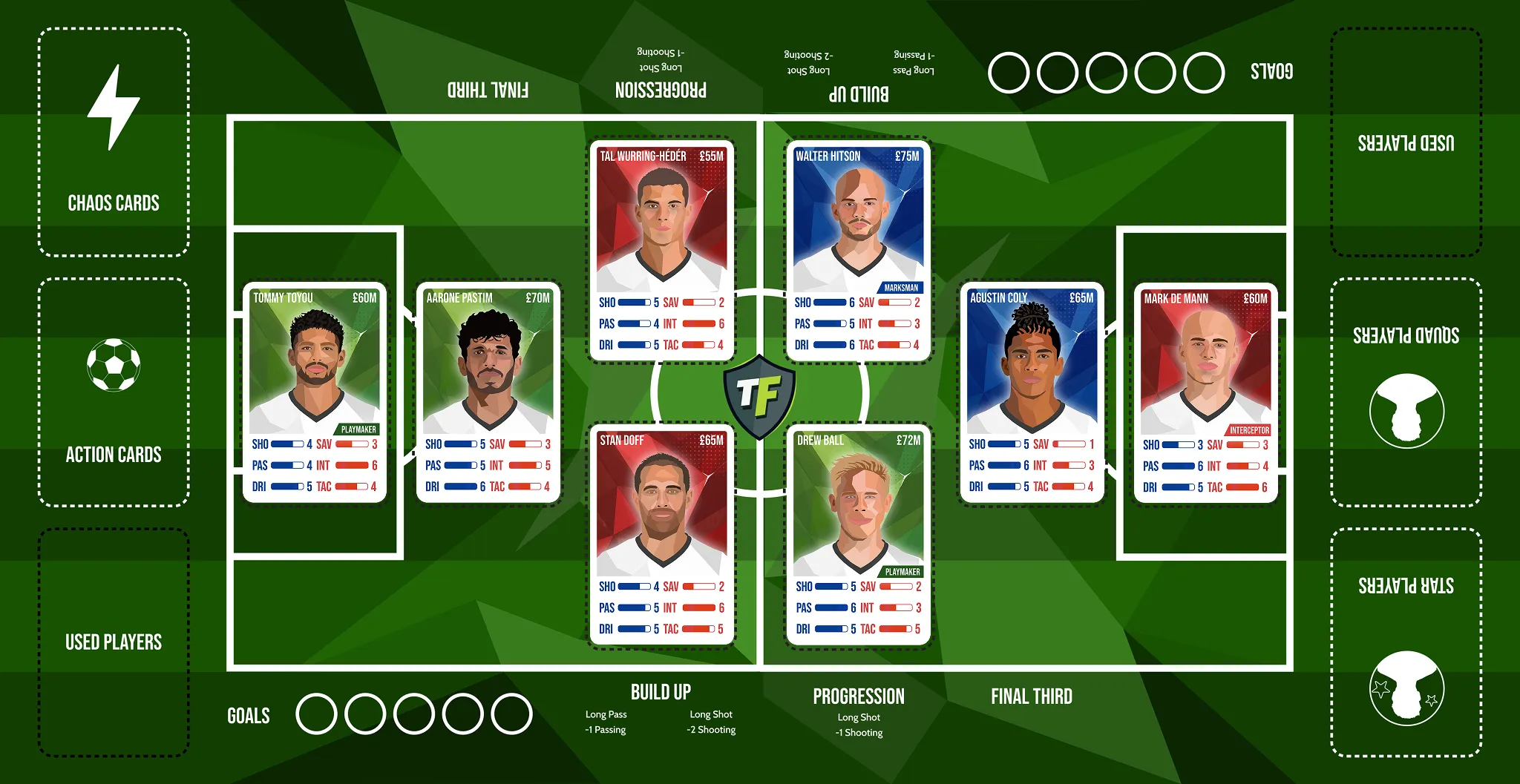
Players take it in turns to draft a player from the board until the board is empty.
(For 3 and 4 player games, refill the board and draft a second time)
At the end of the draft, each player should have added 4 star players to their squad, bringing their total squad size to 11.
Playing a match >
Both players involved in the match are dealt 10 action cards.
Each player should have a squad of 11, laid out next to the board, and 4 chaos cards and 10 action cards held in their playing hand.
Both chosen goalkeepers must be placed in goal, to the left of the board.
Decide who will get to attack first. This could be a “home” team if you are in a round-robin playing home and away matches, the result of a coin-flip, or maybe by age - you decide.
Players then begin a “phase of play” with that person as the attacking team, starting in the build-up zone.
During a phase of play
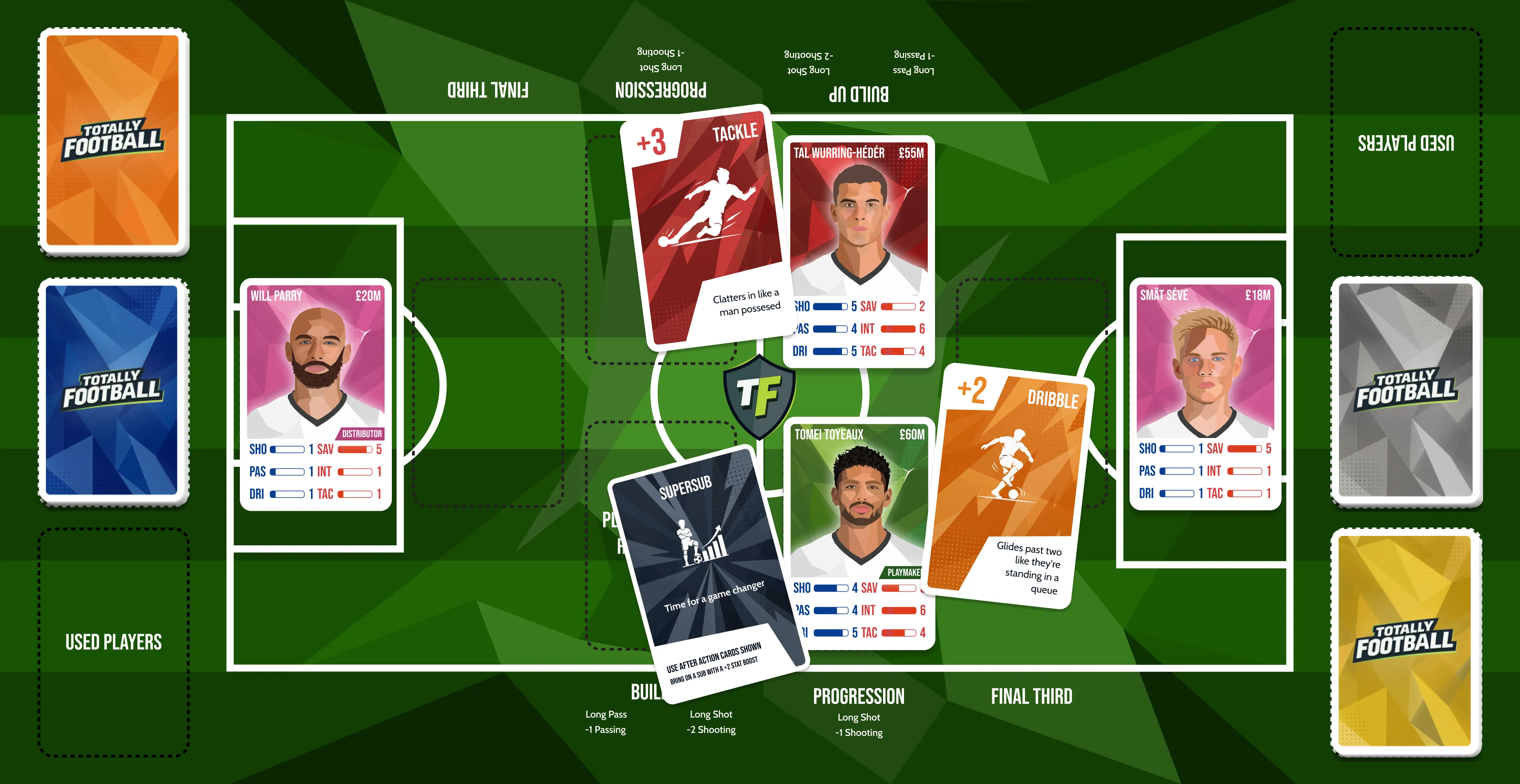
The attacking team will place one of their players in the current zone (dictated by the previous duel - or the build-up zone if it is the first phase) and declares an action that player is performing - pass, dribble or shoot.
The opposition player replies by placing one of their own cards opposite.
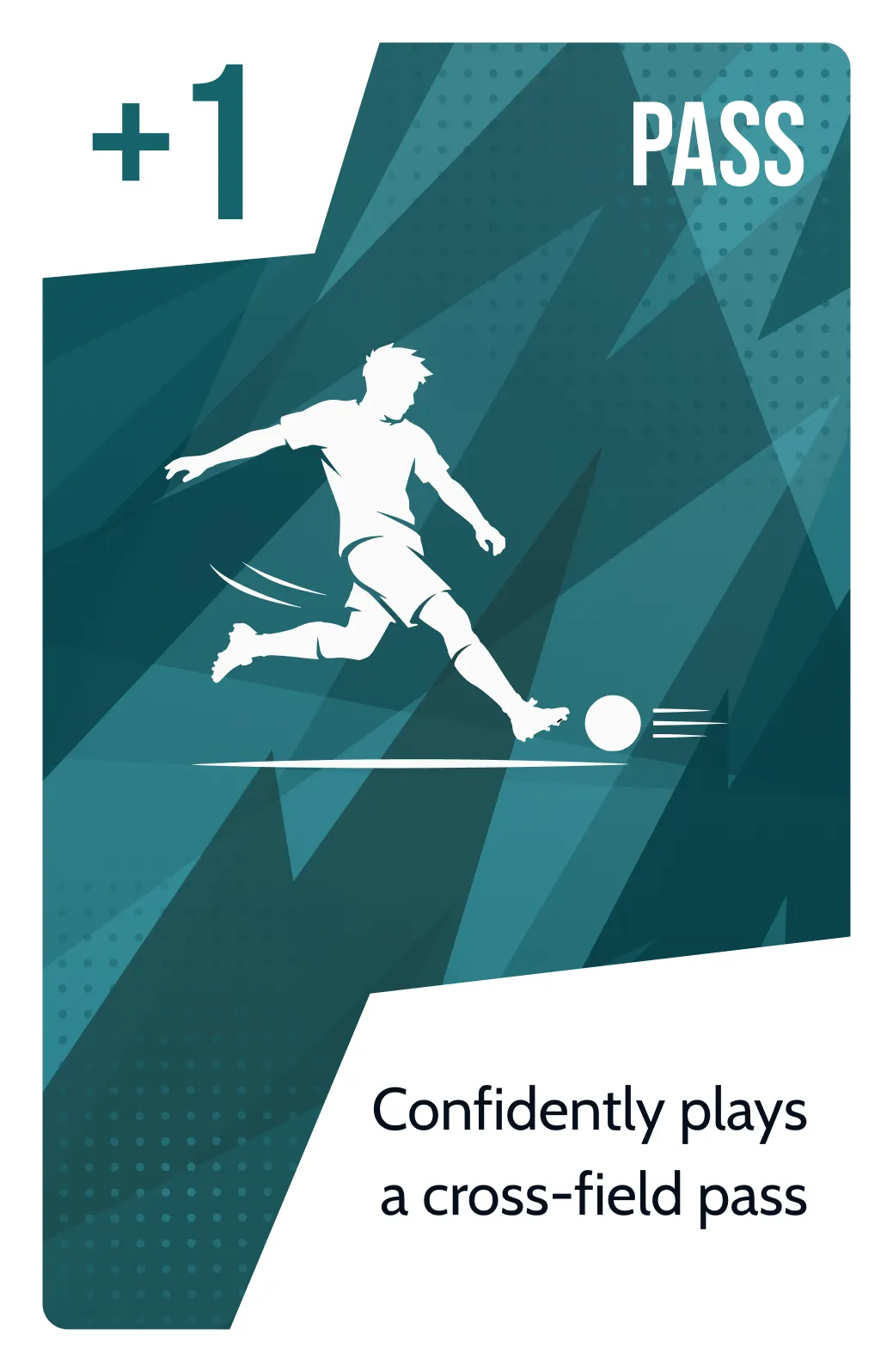
Both players then secretly choose an action card from their hand to play and reveal them simultaneously. The action cards will boost each players stats. An action card must be played, even if you don't have one that can affect the outcome of the duel.
Winning a phase of play
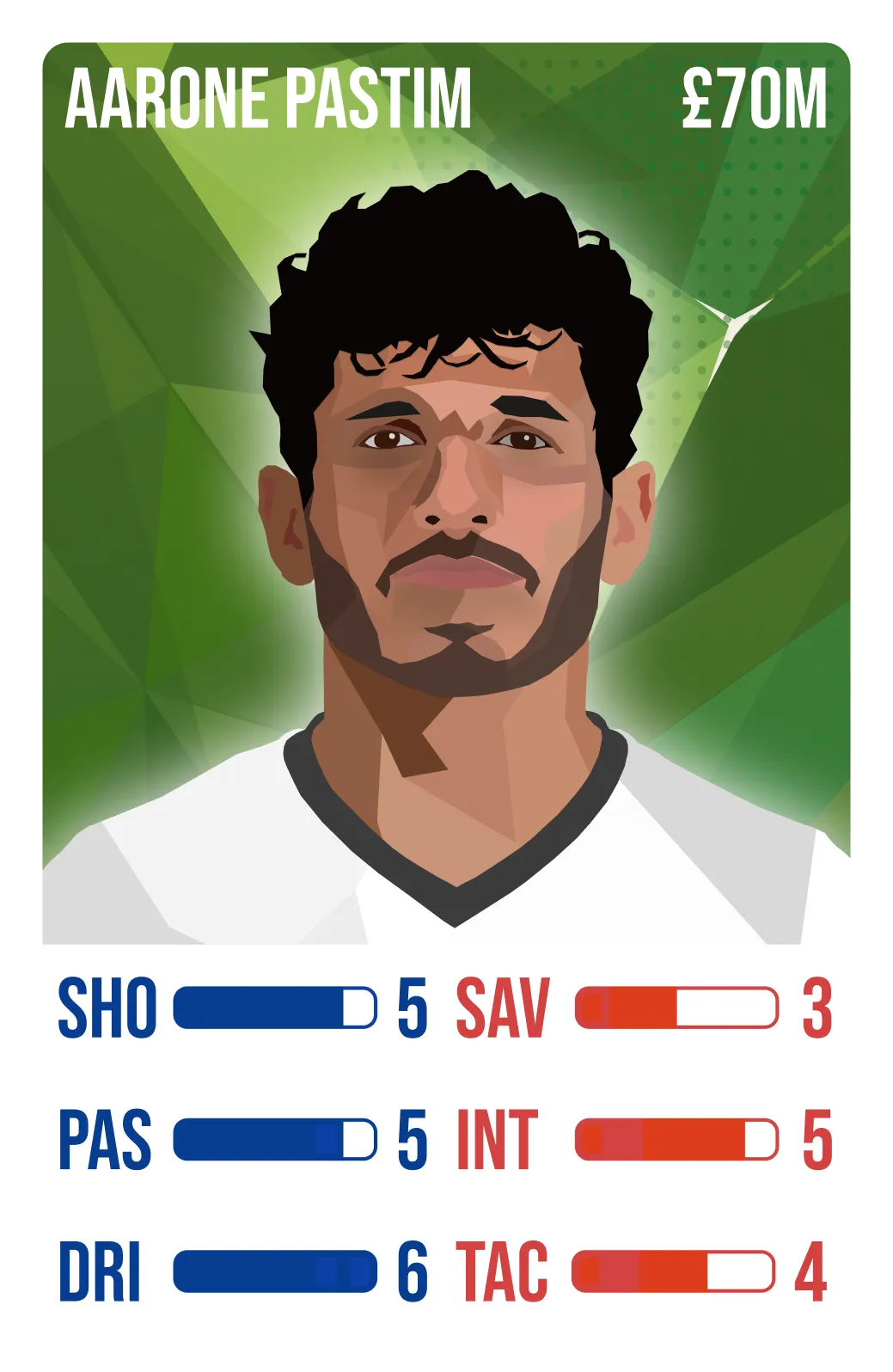
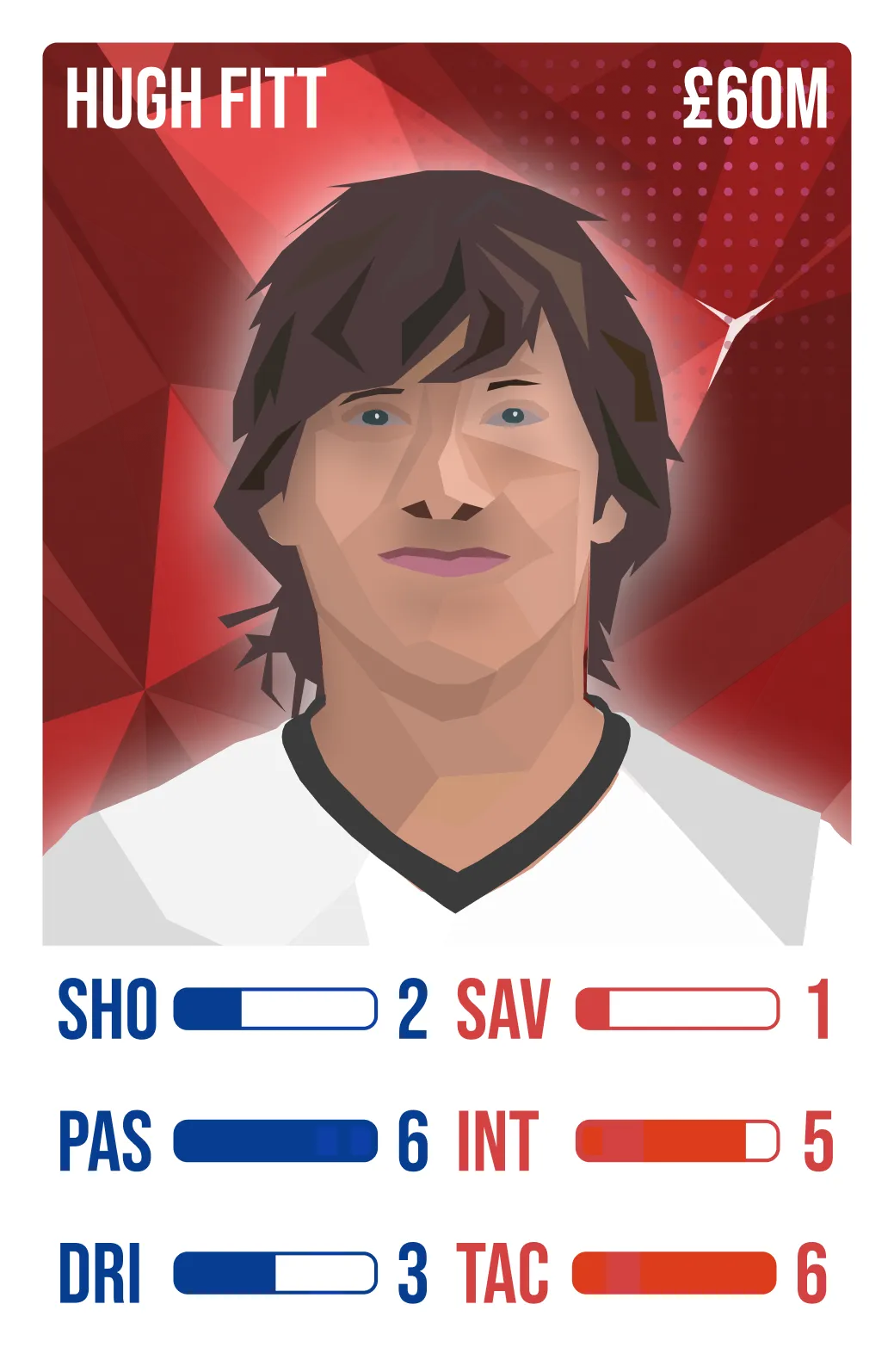
Action card scores are added to player stat scores to get a total score for each player.
The stat used by the defending team is always based on what action the attacking team is making:
Passing vs Intercepting
Dribbling vs Tackling
Shooting vs Saving
Example
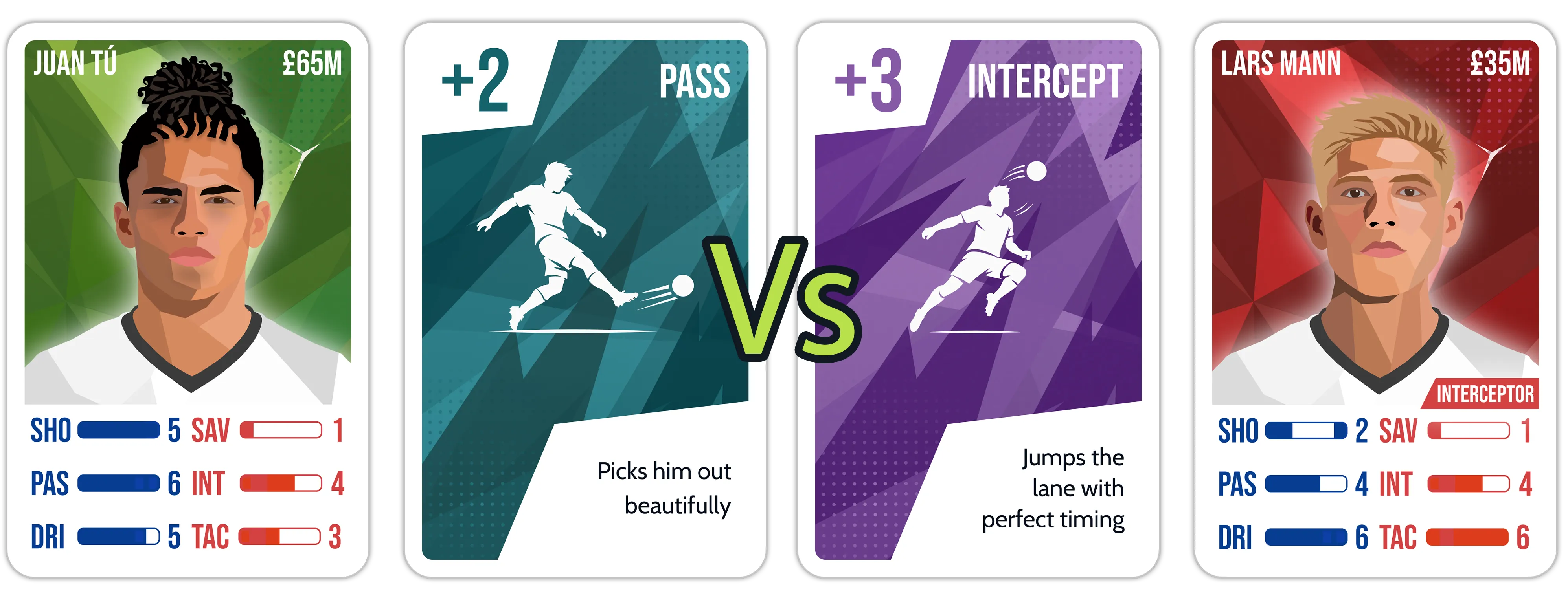
The attacking team is passing with a passing stat of 5. The defending team's chosen player has an intercepting stat of 5.
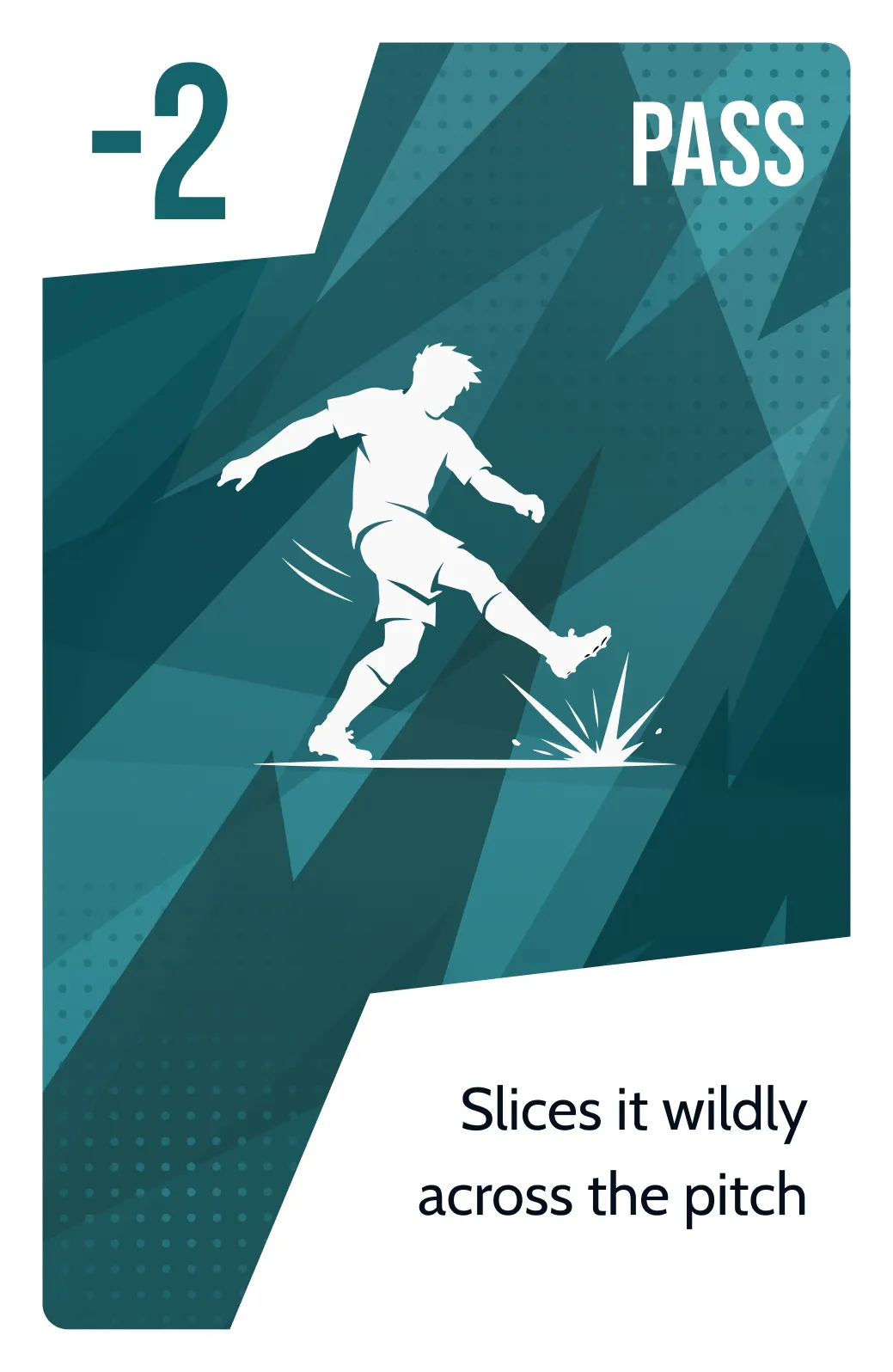
The attacker places a +1 passing action card down. The defender places a -2 passing card down.
The attacking teams total is 4. (5+1-2).
The defending teams total is 5 (no action card affected their intercepting stat).
So, the defender wins.
If the attacking team wins, they get to progress to the next zone, (or score a goal if they are shooting).
If passing, the attacking player is discarded, if dribbling the player is moved to the next zone.
If the defending team wins, their player gains possession where they are, and the attacking teams player is discarded.
If the action was a shot, a new phase begins in the build-up zone.
Tied phase of play
In the event of a tied phase of play, the defending team wins the phase.
The only exception is if the Home Advantage chaos card has been played, in which case all tied duels are won by the player that laid the card.
Long shots & passes
Most passes will only move a player up one spot on the field. But if you feel lucky, you could attempt a long pass and move straight into the Final third.
Doing so will automatically result in a -1 modifier on your passing stat. (Unless your player has a Playmaker trait, and you decide to play with the traits, but more on these later)
Similarly, you can choose to shoot from outside the box, or even from your own half, but these result in a -1 and -2 modifier respectively.
Scoring a goal
If a player scores a goal, their player is discarded and a new phase of play starts in the opposition's build up zone.
The scoring team places a goal indicator token in their goals area.

Full-time
A match ends once all 10 action cards have been played.
At this point, the match enters “Added Time”
Added time >
Whoever currently has possession has one final chance to score from wherever they currently are on the pitch.
(If the previous phase of play resulted in a goal then the team that conceded will have possession in their build up zone for added time and must choose a player to shoot with, placing them in the build up zone.)
Both players roll the dice and the dice values are added to the corresponding “shoot” or “save” player statistic to determine the winner of the duel.
Chaos cards can continue to be played throughout added time. Speaking of which…
Chaos cards >
Players receive 4 chaos cards at the setup stage, and can play a maximum of 3 per match. Cards are topped up to 4 at the start of each match.
To use a card, place it face-up on the table at any point (unless the card specifies when it must be used) and read out the instructions.
Multiple players can place wildcards during any duel and wildcards can also be used in reaction to another wildcard. Players not involved in the match can also play wildcards to affect the match. But only 2 wildcards can be used on a single duel.
Example
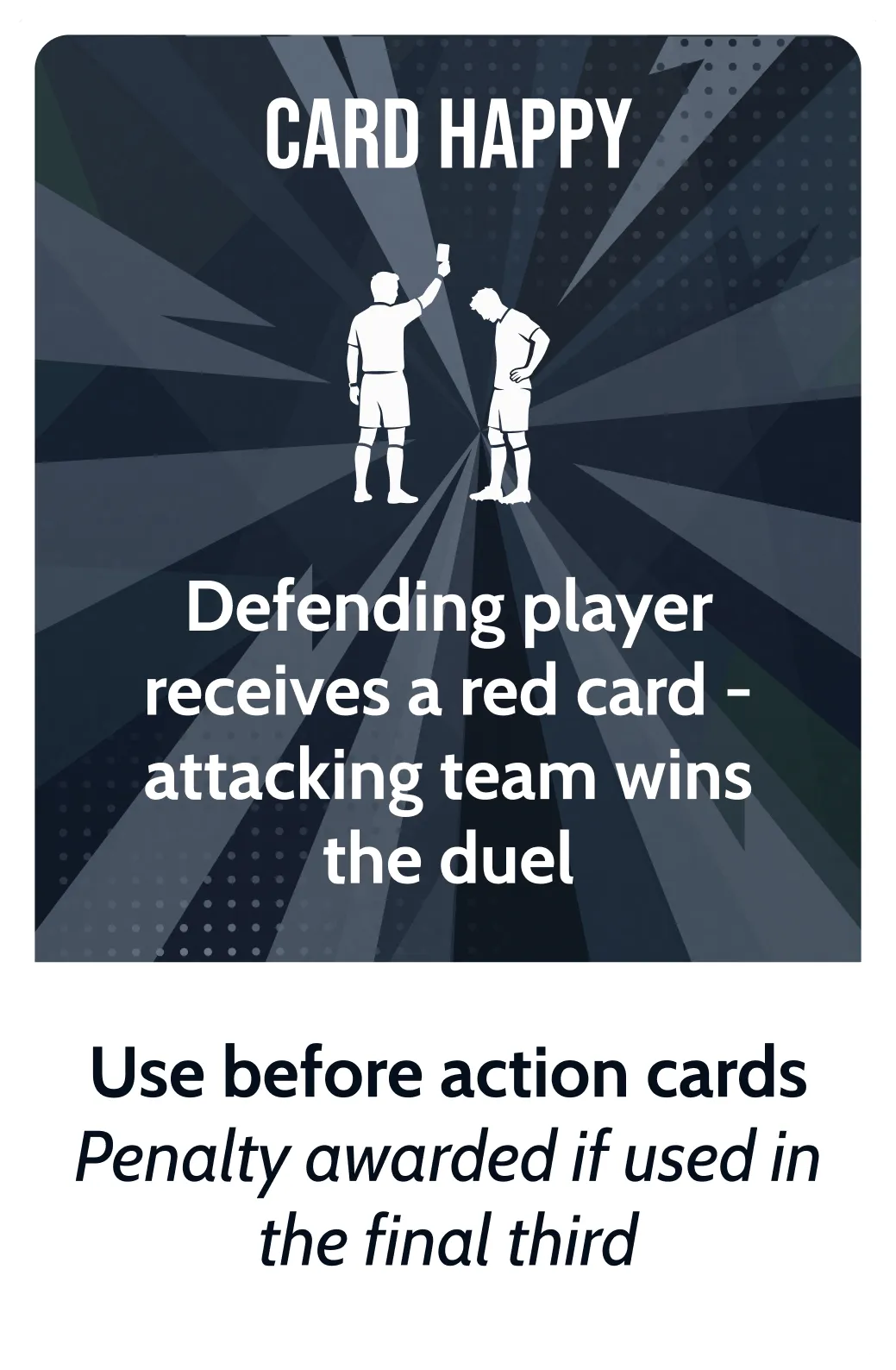
The attacking team plays a “Red Card” wildcard to instantly win that duel.
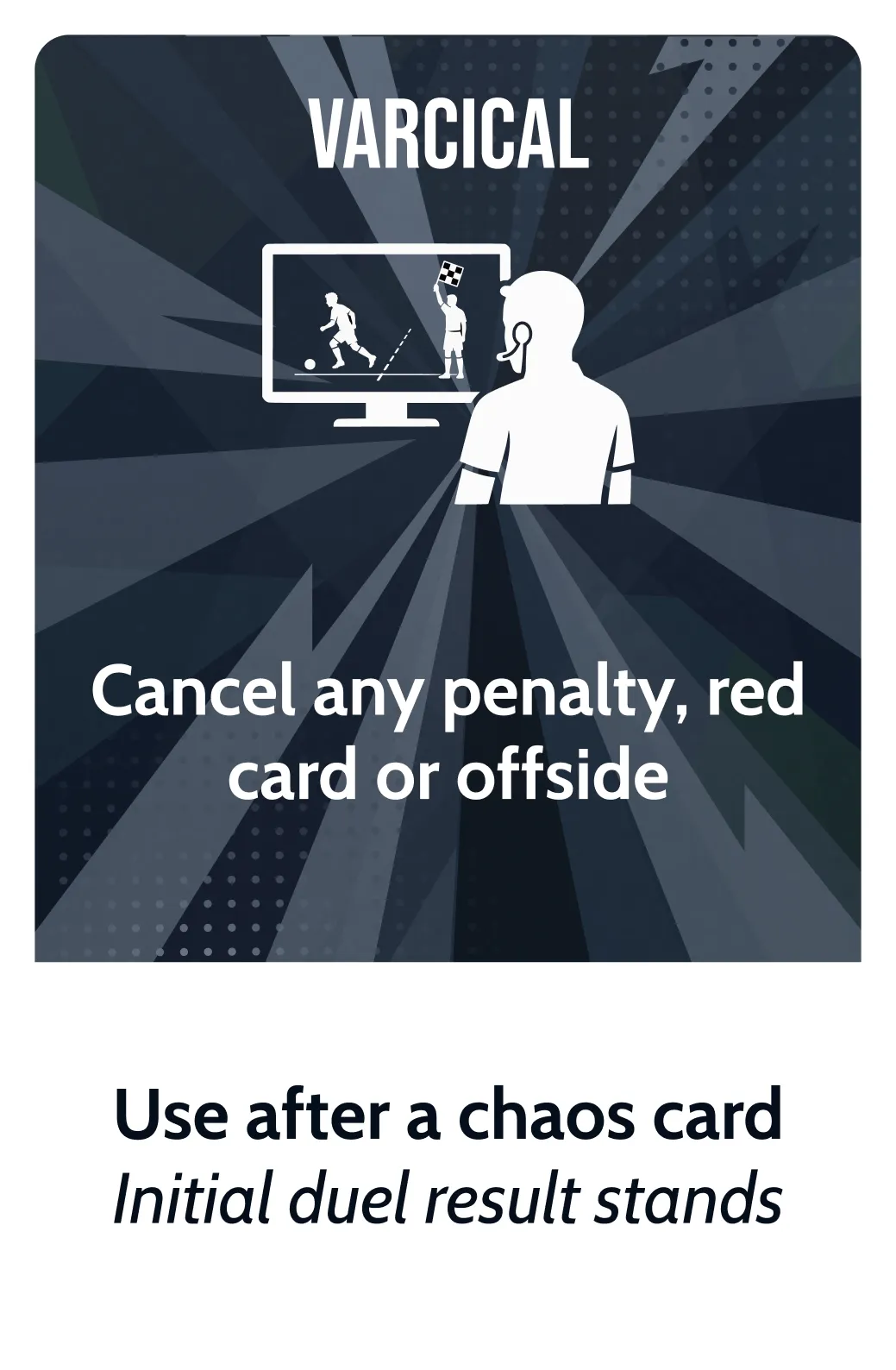
The defending team reacts by playing a “VARcical” wildcard to revert the decision.
vs
Player traits >
Some players have an additional trait on their card. You can decide whether you want the traits to be in effect or not.
| Trait | Explanation |
|---|
| Marksman | Negative modifiers for long shots take no effect |
| Playmaker | Negative modifiers for long passes take no effect. |
| Interceptor | Applies a +1 boost to interceptions when facing a long pass. |
| Acrobat | Applies a +1 boost to saving stats when facing a long shot |
| Distributor | After saving a shot, the next phase begins in the progression zone. |
Penalty shootout >
Depending on how you're playing, you may wish to decide a tied match with a penalty shootout.
Players place their players face-up on the table in the order they will take penalty kicks.
In turns, players place their penalty taker on the board.
Both players roll the dice and their dice value is added to the corresponding “shoot” or “save” player statistic to determine the outcome of the penalty.
Normal phase of play tied rules apply to each penalty kick.
A goal token is placed in the players “goal” area, with the “X” side up if the penalty was missed.